Tag: VPN

  • What to do if WhatsApp gets blocked in Zimbabwe

    What to do if WhatsApp gets blocked in Zimbabwe

    Zimbabwe once again finds itself going tough times and that said, Zimbabweans are speaking out more about their frustrations. Many are sharing their feelings, thoughts and frustrations via social media and other communication platforms such as WhatsApp. The messages have inspired many to speak out and stand up for what they feel is right.

    But, the government does not seem to like what people are doing and saying and has deemed some of these communications as being tantamount to treason. To that effect, POTRAZ put out a statement to inform citizens that communications on social media and WhatsApp will be monitored. They went on the say that people with messages that, “cause despondency, incite violence, threaten citizens and cause unrest, will be arrested and dealt with accordingly in the national interest”.

    If this is of concern to you, you can employ various methods to prevent the Zimbabwe government from spying on you and your online activity.

    As far as WhatsApp goes, the company itself says that they offer end-to-end encryption where the only person who can read a message is the person or group chat it is sent to. They go on to say,

    No one can see inside that message. Not cybercriminals. Not hackers. Not oppressive regimes. Not even us. End-to-end encryption helps make communication via WhatsApp private – sort of like a face-to-face conversation.

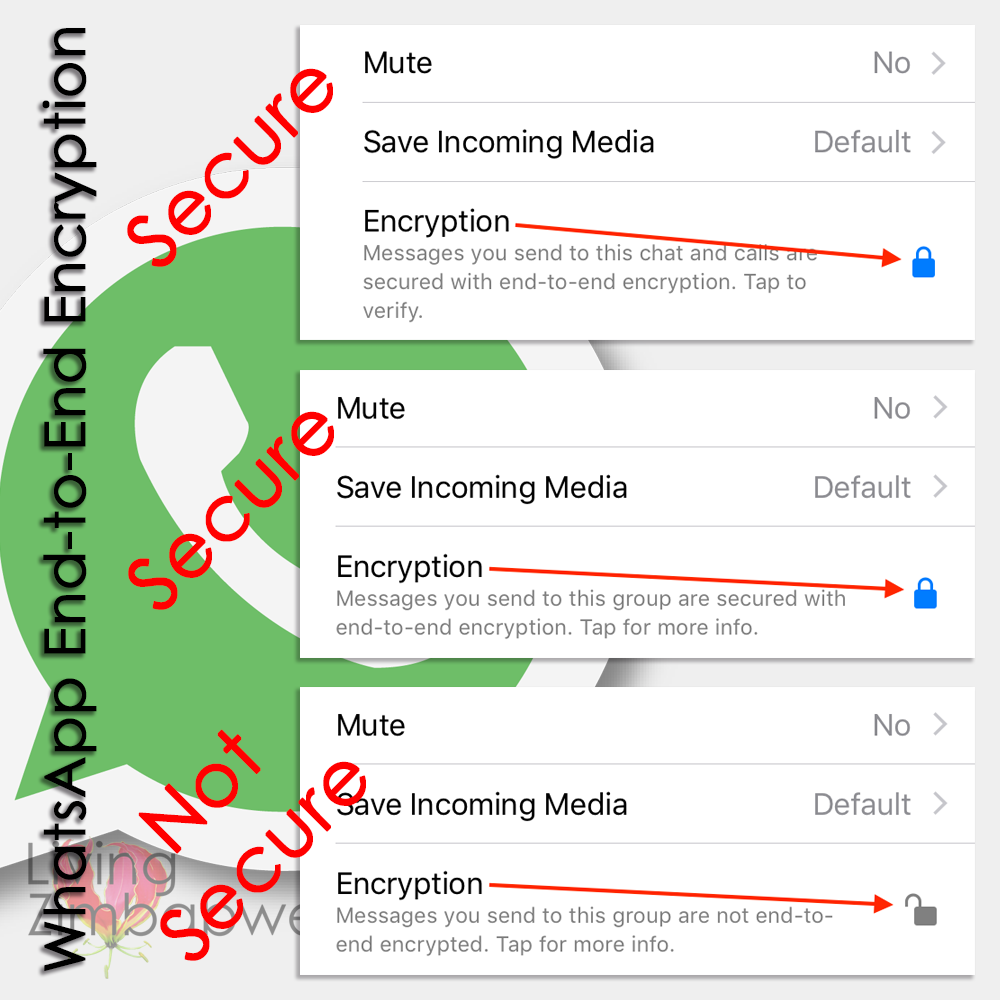
    But, in order for encryption to be activated, all parties within the conversation have to be using the latest version of WhatsApp. Are you and all of your contacts using the latest version? As already mentioned in the post about being spied on (link above) it was mentioned that in the case of a conversation between two people, it is easy enough to get encryption assurance. All you have to do is tell the other person to update their software. In the case of group conversations, that may be easier said than done. All it takes is just one person to not be using the latest version which effectively makes the conversation insecure and open to prying eyes. (continued below)
    WhatsApp-End-to-End-Encryption-Living-Zimbabwe

    More often than not, it is via groups that a number of the messages that the government doesn’t was spread are shared. So, make sure that everyone within your groups is running the latest version. Besides the added security of a VPN, end-to-end encryption is a good way to ensure that you are shielded from prying eyes.

    Another issue that citizens of Zimbabwe faced last week and may well so face in the future is not being able to use WhatsApp. On the 6th of July, many people reported not be able to use it to communicate. This may (or may not) have been the government/service providers blocking there service as a result of #ShutdownZim2016/#ZimShutdown2016.

    How to unblock WhatsApp

    If you do find yourself not being able to use WhatsApp, setup a VPN (virtual private network) and try it out. Not only will it give you an extra layer of security, it will also unblock any services that become blocked by the government and/or ISPs (internet service providers). See the video below (from PureVPN.com) for a brief rundown on what a VPN is and what it can do for you with regards to any apps that may get blocked.

    https://youtu.be/TNuhOvnaua0

    Do you have any other methods that people can use to unblock WhatsApp if it gets blocked in Zimbabwe?
  • Become anonymous online with a VPN & prevent the Zimbabwe government from spying on you

    Over the last few weeks, Zimbabweans have been exercising their freedom of speech and especially so via social media and messaging platforms such as WhatsApp. All that you have to do is log into Facebook or Twitter where you will more than likely come across updates from friends expressing their sentiments on the situation in Zimbabwe. If it’s not them expressing their own sentiments then it may be them sharing various content from other Zimbabweans who have had enough. Even if you aren’t active on social platforms but are on WhatsApp, then you will probably have received an image or video of people expressing their feelings.

    Movements such as #ThisFlag which was started by Pastor Evan Mawarire may have been one thing that really got the fire burning. Using the Zimbabwe flag as a centrepiece, it inspired people to share their frustrations online by either uploading a video of them saying what they have to say or them being part of the movement by proudly displaying their Zimbabwean flag. This eventually led to a call to action being made for citizens of Zimbabwe being asked to shut Zimbabwe down and stay away from work because of inaction from the government.

    #ShutdownZim2016/#ZimShutdown2016 took place on 6 July 2016 and it saw city streets being deserted on a day where they would have otherwise been hustling and bustling.

    https://instagram.com/p/BHhDmh9juiW/

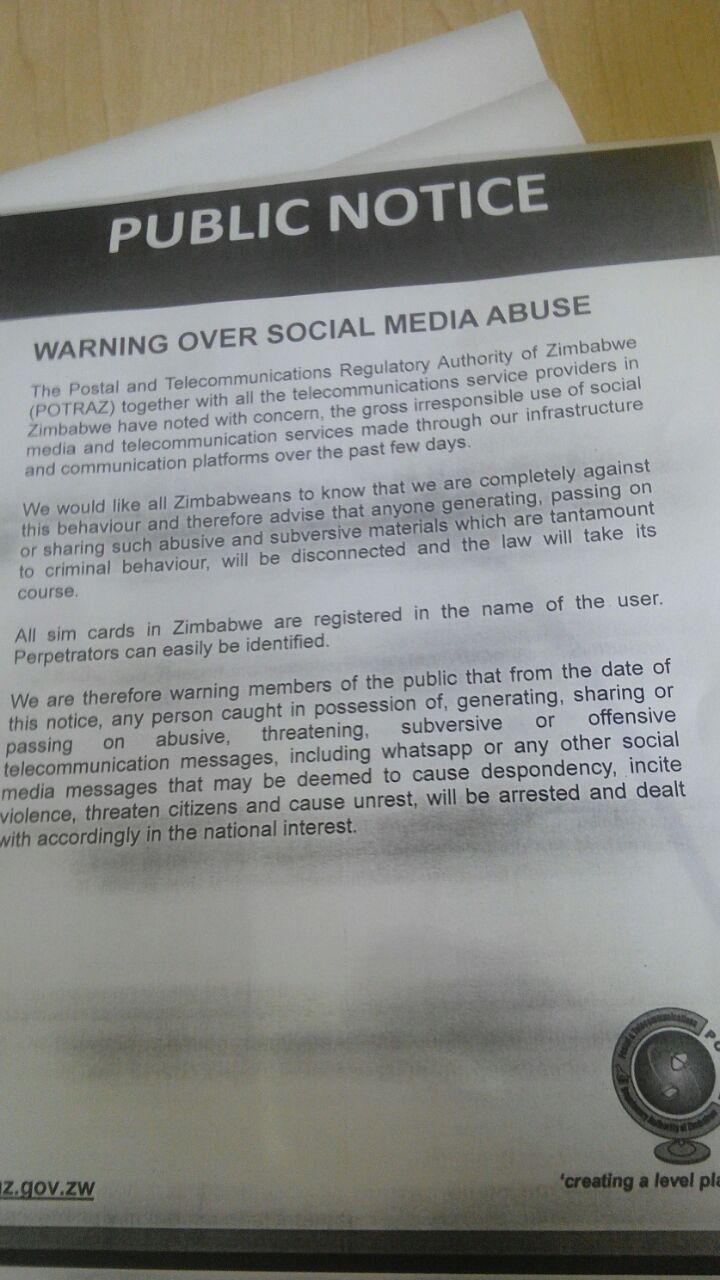
    All of this activity has not gone unnoticed by the government and other associated organisations. The government decided to act on the matter and released a statement via the Postal and Telecommunications Regulatory Authority of Zimbabwe (POTRAZ). The statement served to inform citizens that certain types of communications will not be tolerated in Zimbabwe and anyone caught with or distributing such would be dealt with accordingly. (continued below)

    Warning-Over-Social-Media-Abuse-POTRAZ

    An extract of the statement reads:

    “All sim cards in Zimbabwe are registered in the name of the user. Perpetrators can easily be identified. We are therefore warning members of the public that from the date of this notice, any person caught in possession of, generating, sharing or passing on abusive, threatening, subversive or offensive communication messages, including WhatsApp or any other social media messages that may deemed to cause despondency, incite violence, threaten citizens and cause unrest, will be arrested and dealt with accordingly in the national interest,”

    Strangely so, on the 6th of July, scores of people were not able to use WhatsApp. Was this the government showing that it has the ability to block various forms of communication in their interests? A tweet by Jonathan Moyo caused a bit of a stir as some people took it as an informal admission that there would be difficulties using WhatsApp.

    Whatever the case may be as far as blocking certain services go, who knows what the government is or isn’t capable of doing? Internet traffic, yes, that is easy enough to monitor. But, services like whatsapp do say they have end to end encryption which only works when all parties are using the latest version of WhatsApp. More often than not, groups messages aren’t secure. If only one person in the group has not updated their WhatsApp then messages within the group won’t be secure. Are you part of a group that frequently discusses and shares content that could result in your arrest?

    You never really know who may be monitoring your online activity and even with services that say they encrypt data, you can’t always take their word for it. The best thing you can do for yourself if you are concerned about the possibility of being spied upon by the authorities or other unscrupulous individuals online, is to install a VPN.

    What is a VPN (Virtual Private Network)?

    Besides giving you a good layer of protection, a VPN which is a virtual private network does three main things and that is to keep you secure online, makes you invisible online and give you internet freedom (being able to access content and/or services that have been blocked by your service provider or government).

    It creates a secure tunnel (so to speak) between you and whatever you are accessing on the internet. A VPN hides your IP address and location and makes you appear as if you are in a location (country) different to where you actually are. It also encrypts your communication thus preventing, hackers, your ISP (internet service provider) and the government from accessing, tracking and monitoring you. Because it give you the ability to choose your location, this allows you to use services that may otherwise become blocked in Zimbabwe.

    VPNs can be installed on Windows, Mac, iOS, Android and other devices that connect to the internet such as TVs and game consoles.

    How do I set up a VPN?

    If you are technically inclined, it is possible to set up your VPN server at home. To set one up on your own, there is a wealth of information on Google on how to do this. Be aware that if the setup is not done correctly it can leave you vulnerable, leaving your IP address and data being visible to prying eyes.

    The other way of setting up a virtual private network is through one of the many VPN providers put there. Most of these providers offer easy setup options that will see your network up and running in only a few clicks. Most of them do come at a cost but some offer free service options that will get you up and running. Hide.me and PureVPN.com offer free options that give 2GB data transfer per month.

    Now it’s time for you to take a look at your digital life and ask yourself, ‘is my data secure and is my online activity hidden from the government or anyone else who might want to spy on me’?