This weeks @263Chat hosted by Sir Nige and Pearls, Heels & Dreams was focused on CANCER but was originally centered on breast cancer given that it is Breast Cancer Awareness Month. One thing that was apparent during the chat session was that just about everyone who joined in on the conversation had been directly affected by cancer be it a family member, friend or colleague living with or having lost their life to some type of cancer.
Other insights that came to light when talking about cancer and Zimbabwe were fear and stigmatization. The fear is a fear of the unknown or of getting to know whats going on and what the end result might be. The stigmatization is that cultural problem where when someone develops a condition, phrases such as “aka royiwa” (bewitched) are thrown around.
Breast cancer is a dreaded disease and causes a lot of fear and anxiety that prevents women from going for regular screening or to the doctor when they feel that something is not quite right. No-one wants to hear that they have something like breast cancer but advances in medicine have made it a condition that is manageable if it is caught early. Stigma also plays a role in preventing people from seeking medical advise. Breast cancer has a number of associated risk factors but, being subjected to one or more doesn’t mean you WILL develop the cancer. Conversely, being subjected to zero risk factors doesn’t mean that you WON’T develop the cancer. Just being a woman and growing older puts you at risk. Cancers are not the result of evil doing by someone who has a grudge against you.
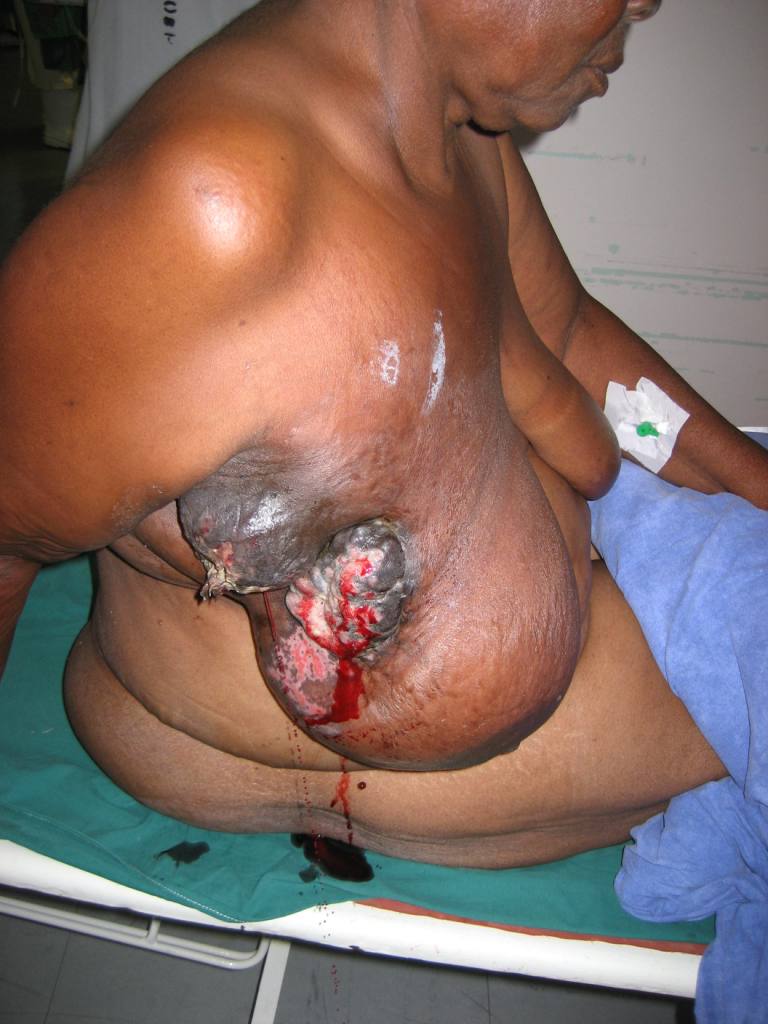
We here at Living Zimbabwe personally know of women who have battled with breast cancer. These women whose ages ranged from the early 30’s to the late 40’s fought different battles because of the way in which they managed the condition. The woman in her early 30’s was diagnosed when the cancer was in it’s early stages. Her treatment included a mastectomy and radiotherapy. She went on to lead a normal life and start a family. The other’s were diagnosed when the cancer had progressed significantly. Both sought medical attention with varying outcomes. One of them (we’ll call her X) was committed to following prescribed treatments. The other (we’ll call her Y), was not so diligent and was somewhat in denial, didn’t follow advice and treatment. Both of these women lost their battles but X had a bit more time to come terms with her cancer and more time to spend with her family. For Y, the disease rapidly took over and the result was painful (both physically and emotionally) and unpleasant for her and those close to her.
Breast cancer doesn’t need to be a killer and there are a number of key steps that can be taken to win the battle. They include early detection, education and support:
- Early detection – if cancer is present and it is caught early, the chances of survival are significantly increased
- Education – knowing what it is, what the risk factors are, when and where to get screening are pivotal. Knowledge is power
- Support – talking about it and getting or giving the correct information and supporting those living it strengths the fight and also helps to dispel false stigmas that exist in society
If you haven’t had breast cancer screening or know someone that you care about whom you think should probably get checked, we encourage you to make it happen at the earliest possible convenience. You don’t want to leave it too late (look at the image below).
[quote]Do not be afraid of tomorrow; for God is already there ~ Author Unknown[/quote]
For more information on breast cancer and cancer in general, visit the following resources:
- The Cancer Association of Zimbabwe: http://www.cancerzimbabwe.org/breast_cancer.html
- World Health Organisation: http://www.who.int/cancer/detection/breastcancer/en/